

Peptide therapy is getting more attention, and it makes sense why. Many women are looking for support with energy, recovery, metabolism, sleep, hormones, and feeling more like themselves again. They’re tired of guessing, tired of being told to simply push harder, and tired of hearing that exhaustion, stress, or feeling off is just part of motherhood, aging, or a busy life.
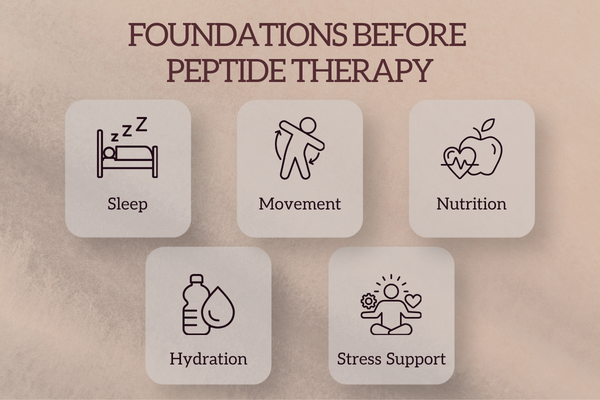
At Revive With Me, we believe peptide therapy can be a meaningful tool when it’s appropriate, medically guided, and personalized. But peptides are still tools. They don’t replace the foundations your body relies on every day. They don’t replace sleep, hydration, protein, minerals, movement, nervous system support, or the daily rhythms that help your body know when it’s time to be alert and when it’s time to recover.
That’s why one of the most important conversations we have at Revive is not just, “Which peptide makes sense?” It’s also, “What does your body need around the protocol?” Because support works best when the full picture is being considered.
Peptides Aren't Meant to Do Everything Alone
It’s easy to think of peptide therapy as the main event. Someone hears about a protocol, sees a post online, or has a friend who had a good experience, and suddenly the focus becomes the peptide itself. Which one should I ask about? How quickly does it work? What kind of results should I expect?
Those questions are common, but they’re not the only questions that matter. The body isn’t a machine where you add one input and get the same output every time. Two women can be interested in the same kind of support and still have completely different needs based on sleep, stress, nutrition, hormones, medications, life stage, and overall capacity.
That’s why Revive doesn’t look at peptide therapy as a shortcut. We look at it as part of a broader plan. Before adding more, we want to understand what your body is already carrying.
Your Daily Rhythm Matters More Than You Think
Your body is constantly responding to signals. Light, food, movement, stress, sleep, and hydration all give your body information about what kind of state it should be in. Should it be alert? Should it be recovering? Should it be digesting? Should it be conserving energy? Should it be preparing for stress?
When life is full, these signals can get messy. You wake up tired, check your phone before you get out of bed, drink coffee before water, skip breakfast because the morning is busy, sit for long stretches, eat quickly, stay under bright lights late at night, and fall asleep with your nervous system still activated.
None of this means you’re doing anything wrong. It means modern life often works against the rhythms your body was designed to use. Peptide therapy may be part of a plan for some people, but it can’t fully replace the steady signals your body needs throughout the day.
Hydration, Light, and Movement Are Simple Places to Begin
Hydration sounds basic, but it’s often the first thing to slip. Many women are running on coffee, a few sips of water, and whatever they can fit between school drop-off, work, errands, workouts, and family needs. Hydration supports digestion, circulation, temperature regulation, fluid balance, and overall daily function. When hydration is low, someone may feel depleted, foggy, headachy, or less steady. However, those symptoms can also come from many other causes and should be discussed with a provider if they’re new, persistent, or concerning.
Morning light and movement can also help create a clearer transition into the day. This doesn’t have to look like a perfect routine. It might be stepping outside with your coffee, walking the dog, taking a short walk after school drop-off, opening the blinds while you make breakfast, or moving for a few minutes before the day gets crowded.
The point isn’t to add another unrealistic task. The point is to give your body a few simple signals that support the day instead of starting from stress, screens, and rushing. For women who feel like they’re always “on,” those small signals can matter.
Stress Support Has to Be Realistic
When people hear “stress support,” they often think it means doing a long meditation, taking a full day off, or building a routine that doesn’t fit their life. But support can be much smaller than that. It might be a few longer exhales before walking into the house, a quiet minute in the car before pickup, a short walk after a tense conversation, turning down unnecessary noise, eating before you’re running on empty, or getting outside for a few minutes instead of pushing through another hour inside.
At Revive, we talk a lot about the nervous system because it affects how the body responds to care. When the body is under constant stress, it may prioritize getting through the day over repair, recovery, digestion, or steady energy. That doesn’t mean the body is failing. It means the system may need more support.
This is one reason peptides should not be viewed as standalone solutions. If the body is undernourished, dehydrated, sleep-deprived, or constantly activated, the plan may need to address those pieces too.
Food Gives the Body Something to Work With
Nutrition doesn’t have to be perfect to be supportive. A lot of women hear “nutrition” and immediately think restriction, tracking, or another plan they’re supposed to follow. That’s not the Revive approach.
We’re more interested in whether the body is getting enough of what it needs to function. Protein, fiber, healthy fats, minerals, consistent meals, and enough food all matter. If someone is eating too little, skipping meals, or relying on caffeine to get through the day, it can be harder to feel steady. This can be even more important for people using therapies that may change appetite or intake.
Food isn’t a replacement for medical care, and it doesn’t guarantee a specific treatment outcome. But it does help create a more supportive environment for the body. That’s why Revive’s nutrition content focuses on simple, whole-food support, not perfection. A balanced plate, steady protein, hydration, and meals that actually fit real life can make a meaningful difference in how supported someone feels during care.

Sleep Is Still Required
No protocol replaces sleep. Sleep is when the body does much of its repair and restoration work. It affects energy, mood, hunger, stress tolerance, recovery, and how someone feels moving through the day.
But we also know that sleep is complicated, especially for women. Motherhood, stress, perimenopause, postpartum changes, late-night work, worry, and nervous system activation can all affect rest. Sometimes the issue isn’t that someone doesn’t care about sleep. It’s that her body has been living in a state where sleep no longer feels restorative.
That’s why Revive looks at sleep as part of the full picture. If someone is tired, foggy, slow to recover, or feeling depleted, we don’t want to skip over the basics and jump straight to adding more. We want to understand whether the body is getting a real chance to recover, because without rest, everything else has to work harder.
More Isn't Always Better
In wellness, it’s easy to believe that if one thing helps, more things must help more. More supplements. More tools. More protocols. More tracking. More pressure. But more is not always better.
Sometimes the most supportive next step is not adding another product. It’s reviewing the plan, looking at labs when appropriate, and asking about sleep, stress, food, hydration, medications, symptoms, and what the person can realistically sustain.
This is where medically guided care matters. Peptide therapy should not be reduced to copying someone online, ordering something without oversight, or building a stack based on what worked for another person. The right plan depends on the person, not the trend.
At Revive, we want care to feel thoughtful. We want patients to understand why something may or may not make sense for them. We want the foundation to be part of the conversation, not an afterthought.
How Revive Looks at the Full Picture
At Revive, peptide therapy is personalized, provider-guided, and rooted in the full picture. That may include sleep, hydration, protein intake, stress load, nervous system state, hormone shifts, symptoms, goals, medical history, current medications, current supplements, labs when appropriate, and what kind of support is realistic for your life.
The goal is not to build the most complicated plan. The goal is to understand what your body may be asking for and what kind of support actually makes sense.
For some people, that may include peptide therapy. For others, the first step may be strengthening the foundation. For many, it may be both. But the starting point is the same: understanding before adding more.

Start With the Foundation
Peptides can be powerful tools, but they’re still tools. They work best when they’re part of a thoughtful plan that respects the body’s need for rhythm, nourishment, hydration, recovery, and medical oversight.
You don’t need to do everything perfectly before asking for support. That’s not the point. The point is that your body deserves more than a shortcut. It deserves care that looks at the whole picture.
If you’re curious about peptide therapy, wondering whether your current protocol makes sense, or feeling like your body may need a different kind of support, the next step is not guessing.
Book a consultation to start the conversation.
Support starts with understanding.
**This article is for general educational purposes only and is not medical advice. Peptide therapy, supplements, medications, and treatment decisions should always be discussed with a qualified healthcare provider.