

If your energy feels lower than it used to, it can be frustrating, especially when you are already trying to do the right things. You may be sleeping more, eating better, taking supplements, walking, strength training, or cutting back on stress where you can, but still feel foggy, heavy, depleted, or slow to recover.
That does not always mean you need to push harder. Sometimes, the body needs support at a deeper level.
Energy is not only about motivation, caffeine, or getting through the day. It is also about how well your cells produce and use energy. When the body is chronically stressed, undernourished, underslept, inflamed, or metabolically overwhelmed, energy can feel harder to access.
This is where mitochondrial health becomes part of the conversation.
Mitochondria help convert nutrients into usable cellular energy. In recent years, mitochondrial peptides have been discussed for their role in supporting cellular energy, metabolism, recovery, and resilience. But like all peptide therapy, they should be approached thoughtfully.
At Revive, peptides are viewed as support, not shortcuts. The goal is not to override the body. The goal is to understand what the body is asking for and support it in a medically guided way.
What Are Mitochondria?
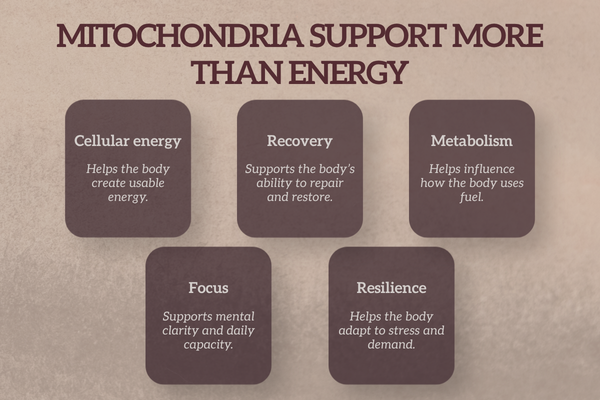
Mitochondria are often called the energy centers of the cell because they help turn fuel into usable energy. That energy affects much more than whether you feel awake in the morning. It influences movement, focus, recovery, metabolism, immune function, repair, and resilience. When mitochondrial function is supported, the body has more capacity to do what it is already designed to do: produce energy, recover from stress, repair tissue, and adapt. When the system is strained, daily life can start to feel harder than it should.
This may show up as:
- Low energy
- Brain fog
- Poor recovery
- Exercise intolerance
- Feeling depleted after stress
- Metabolic sluggishness
- Needing caffeine to function
- Feeling like your body has less capacity than it used to
At Revive, we see these signs as information. They can be clues that the body’s energy systems may need more support.
What Are Mitochondrial Peptides?
Peptides are signaling molecules. They help communicate with the body by sending targeted messages. Mitochondrial peptides are discussed in relation to cellular energy, metabolic function, oxidative stress, and recovery. Some peptides and related supports often mentioned in this category include MOTS-c, SS-31, and NAD+ support. That does not mean every person needs them. It also does not mean they should be used casually or without medical oversight.
A better way to think about mitochondrial peptides is this:
They may support the body’s energy systems, but the body still needs the right foundation to respond.
Why Cellular Energy Is About More Than Feeling Tired
When most people think about energy, they think about not crashing in the afternoon or needing less caffeine. But cellular energy is bigger than that.
Your cells need energy for repair, hormone signaling, digestion, immune function, detoxification, metabolic regulation, and recovery. When energy production is strained, the body may prioritize getting through the day instead of repairing, adapting, or building resilience. That is why low energy can feel like more than tiredness.
It can feel like:
- “I can function, but I do not feel like myself.”
- “I am doing everything right, but my body is not responding.”
- “I recover slower than I used to.”
- “I feel like I have no capacity.”
- “I wake up tired, even after sleeping.”
This can be especially relevant during seasons of motherhood, chronic stress, postpartum depletion, perimenopause, poor sleep, or long-term nervous system overload. Your body may not need more pressure. It may need a different level of support.
Timing Matters, But It Should Still Be Personalized
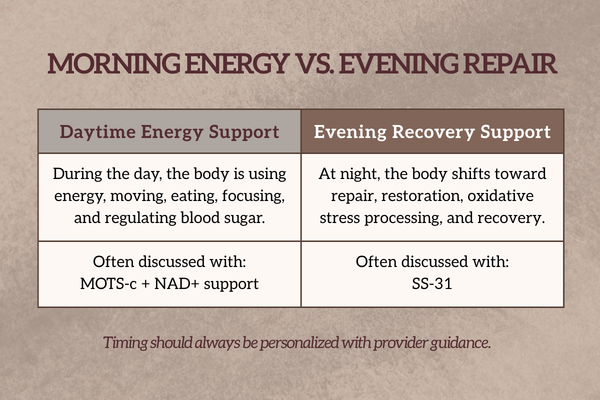
One of the concepts often discussed with mitochondrial peptides is timing. Some mitochondrial-focused supports are often considered earlier in the day because the body is naturally more active during daylight hours. This is when energy production, movement, food intake, blood sugar regulation, and metabolic activity are more central.
For example, MOTS-c and NAD+ support are often discussed in relation to daytime energy, metabolic activity, focus, and performance. Other mitochondrial supports, such as SS-31, are often discussed in relation to repair, oxidative stress, and cellular recovery. Because the body shifts toward restoration at night, this type of support is sometimes considered in the context of evening recovery.
However, this should not be treated as a public protocol or one-size-fits-all instruction.
The right timing depends on the person, the peptide, the goals, the provider’s guidance, and how the body responds. That is why Revive does not approach peptides as a simple timing chart. We look at the full picture before making recommendations.
Why Movement Still Matters
Mitochondrial support works best when it is paired with the body’s natural energy demands. That does not mean intense workouts are always the answer. For someone who is depleted, overstressed, or under-recovered, pushing harder can create more stress. But gentle, consistent movement helps signal the body to use and produce energy.
This may include:
- Walking
- Strength training
- Mobility work
- Daily activity
- Short movement breaks
- Getting outside in the morning
Movement tells the body that energy is needed. It supports circulation, blood sugar regulation, muscle function, and metabolic flexibility. Mitochondrial peptides should not replace movement. They should be considered within a plan that supports the body’s natural ability to adapt.
At Revive, we care about what is realistic. The goal is not to overwhelm the body. The goal is to build capacity in a way the body can sustain.
Why Nutrition and Protein Still Matter
Mitochondria need fuel. If someone is under-eating, skipping meals, low in protein, dehydrated, or experiencing blood sugar swings, energy support can only go so far.
This is especially important for people using peptides that affect appetite or intake. When food intake drops too low, the body may not receive enough amino acids, minerals, or micronutrients to support energy and recovery.
Protein supports muscle, tissue repair, immune function, and body composition. Stable meals support blood sugar and reduce unnecessary stress on the system. Hydration and electrolytes help the body maintain fluid balance, energy, and tolerance.
This connects directly to our guide on peptides and supplements, where we explain that peptides may send the message, but the body still needs raw materials to respond.
Mitochondrial peptides do not replace the basics. They work best when the foundation is strong enough to support the response.
Why Sleep Is Still Required
No peptide protocol replaces sleep. Sleep is when the body does some of its most important repair and recovery work. When sleep is short, disrupted, or inconsistent, mitochondrial recovery may feel limited.
This matters because many people looking for energy support are also sleep-deprived, overstimulated, or running on stress hormones. The body can push through for a while, but eventually it asks for restoration. That is why Revive’s approach to energy is not simply, “take this and feel better.” We look at whether the body has recovery built into the system.
If the nervous system is constantly activated, the body may stay focused on protection rather than repair. Our blog on peptides and the nervous system explains why regulation often has to come before optimization. A depleted body does not always need more stimulation. Sometimes, it needs rhythm, nourishment, and recovery.
Why Results Can Feel Subtle
When someone does not feel the response they expected from mitochondrial support, it does not automatically mean the therapy was wrong. It may mean the surrounding environment needs attention.
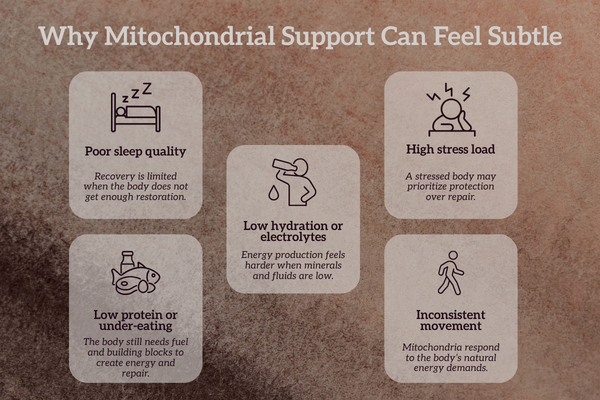
Common reasons results may feel subtle include:
- Not enough movement to support energy demand
- Poor sleep quality
- Under-eating or low protein intake
- Low hydration or electrolytes
- High stress load
- Expecting a stimulant-like effect
- Inconsistent use
- Using a protocol without provider guidance
This is especially important with mitochondrial-focused support because the response may feel different from a quick burst of energy. The goal is not to feel overstimulated. The goal is steadier energy, better capacity, improved resilience, and a body that can recover more effectively over time. That kind of progress can be subtle at first, but it often matters more.
Mitochondrial Support Is Not a Shortcut
It is easy to hear about mitochondrial peptides and think they are a quick answer for fatigue, metabolism, or performance. At Revive, we do not frame them that way. Mitochondrial support should be part of a thoughtful plan that considers the full person.
That includes:
- Symptoms
- Goals
- Sleep
- Stress
- Nutrition
- Movement
- Hydration
- Current medications
- Current supplements
- Existing peptide use
- Labs when appropriate
- Provider guidance
The body is not a simple system with one switch to flip. It responds to context. This is why we are careful not to treat peptide therapy like a trend. Peptides can be valuable tools when used appropriately, but they still require the right plan, the right expectations, and the right oversight.

How Revive Approaches Mitochondrial Support
At Revive, mitochondrial peptides are approached the same way we approach all peptide therapy: personalized, medically guided, and rooted in the full picture.
We do not start with, “What can we stack?” We start with better questions.
Why is energy low? Is sleep supporting recovery? Is stress keeping the nervous system activated? Is protein intake adequate? Is hydration supported? Is the body metabolically supported? Is the patient depleted, inflamed, or under-recovered? Would mitochondrial support make sense, or does the foundation need attention first?
That matters because two people can have the same symptom and need very different plans. One person may need more recovery. Another may need protein and electrolytes. Another may need nervous system support. Another may be a better candidate for provider-guided mitochondrial peptide therapy.
Mitochondrial peptides may be one tool in a larger plan, but the deeper goal is not just more energy. The goal is capacity: the capacity to move through the day without crashing, recover more steadily, think clearly, feel more supported, and respond to the care you are already giving your body.
The right plan depends on the person, not the trend.
If you feel tired, depleted, foggy, slow to recover, or unsure whether your body is getting the support it needs, the next step is not guessing.
Book a consultation to start the conversation.
Support starts with understanding.